Guide · INT.02 Build · 9 min read
Brake pads explained: compounds, temps, fade
One spec decides almost everything about a pad — its temperature window. Learn to read it and the whole market sorts itself into four honest categories.
Brake pad marketing is a fog of adjectives. "Aggressive." "Race-bred." "Ultimate stopping power." None of it tells you whether the pad will work on a cold Tuesday commute or survive lap six of a track session. One number cuts through all of it: the temperature window the compound was designed for. Everything else — dust, noise, rotor wear, price — is a consequence of where that window sits.
01 — The only spec that matters: temperature window
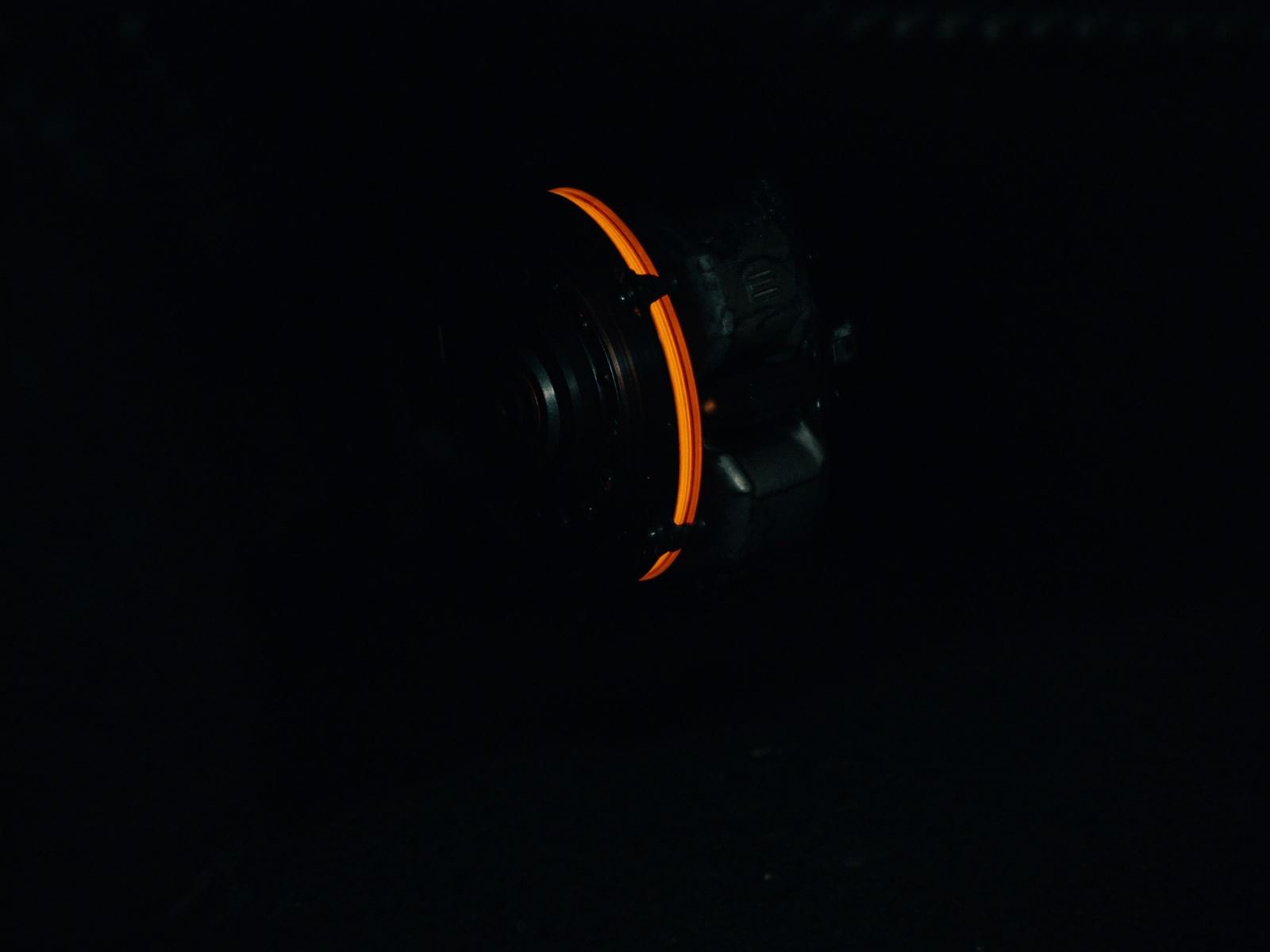
Every friction compound has a range where it grips as designed. Below that range it hasn't woken up; above it, the resins and friction modifiers start breaking down and grip falls off. The two numbers that define a pad are cold bite (how well it works on the first stop of the morning) and maximum operating temperature (the ceiling before fade). A typical street ceramic gives up around 350–380°C. Sport compounds stretch to roughly 450–500°C. The serious dual-duty pads hold on to around 650–700°C, and dedicated track compounds run to 750–800°C and beyond.
The windows trade against each other. A pad built to bite at 20°C cannot also thrive at 700°C, and a pad happy at 700°C will feel wooden rolling out of a cold driveway. That gives you the whole failure map in one sentence: a pad below its window is glass, a pad above its window is fade. Both feel like "the brakes are bad" from the driver's seat, and both are really a matching problem, not a quality problem.
"There are no bad pads, only pads doing a job they were never built for."
02 — Compound families in plain language
Strip away the brand names and there are three broad families. Ceramic and NAO (non-asbestos organic) compounds are the quiet civilians: near-silent, light on dust, gentle on rotors, with a low heat ceiling. Low-metallic and ferro-carbon compounds are the sport middle ground — more bite and a higher ceiling, bought with some dust and the occasional cold squeal. Carbon-metallic and sintered compounds are track hardware: huge heat capacity, poor cold bite, hungry on rotors, and dusty enough to repaint your wheels grey in a weekend.
| Family | Typical max temp | Dust | Streetable? |
|---|---|---|---|
| Comfort ceramic | 350–380°C | Minimal | Yes |
| Sport | 450–500°C | Moderate | Yes |
| Dual-duty | ~650–700°C | Heavy | Mostly |
| Track | 750–800°C+ | Severe | No |
The table is deliberately approximate. Two "sport" pads from different makers can sit 80°C apart, which is exactly why matching by measured window beats matching by category name.
03 — Fade: what it actually is
"Fade" gets used for three different failures. Gas fade is the classic: the compound overheats, its binders outgas, and a thin cushion of vapor lifts the pad off the rotor face. Green fade is the same chemistry happening once, early — a brand-new pad curing its resins under first hard use, which is what bedding-in procedures exist to burn off in a controlled way. Fluid fade is not the pad at all: boiling brake fluid turns an incompressible column into a compressible one.
The diagnostic is in your foot. Pedal goes long and soft, travel increasing stop after stop: that's fluid — fix it with fresh high-temp fluid before you blame the pads. Pedal stays firm but the car simply doesn't slow the way it did three laps ago: that's the pad past its ceiling. The distinction matters because the fixes cost different money and one of them keeps you out of a gravel trap. Our braking distance calculator shows how quickly a modest grip loss stretches a stop from routine to alarming.
04 — How to choose without folklore
Match the pad to the hottest ten minutes you actually drive, not the driving you imagine. A daily commute with the occasional mountain road never pushes a front axle past what a good sport compound handles. Even a hard back-road run on road tires rarely does — tire grip limits how much energy you can feed the brakes, and most drivers on street rubber will never exceed a sport pad's window. Fitting track pads "to be safe" buys worse cold stops, eaten rotors, and noise, in exchange for headroom you'll never visit.
The honest exceptions: repeated track sessions, heavy cars on long alpine descents, towing. Those genuinely reach dual-duty territory. If your car sees track days, pads are also a sequencing question — see where they land in a sensible upgrade path in the build intent. For the actual matching, brakepadfinder ↗ holds tested review data for 26 pads and asks about your real usage before it recommends anything. Answer it honestly and the folklore takes care of itself.